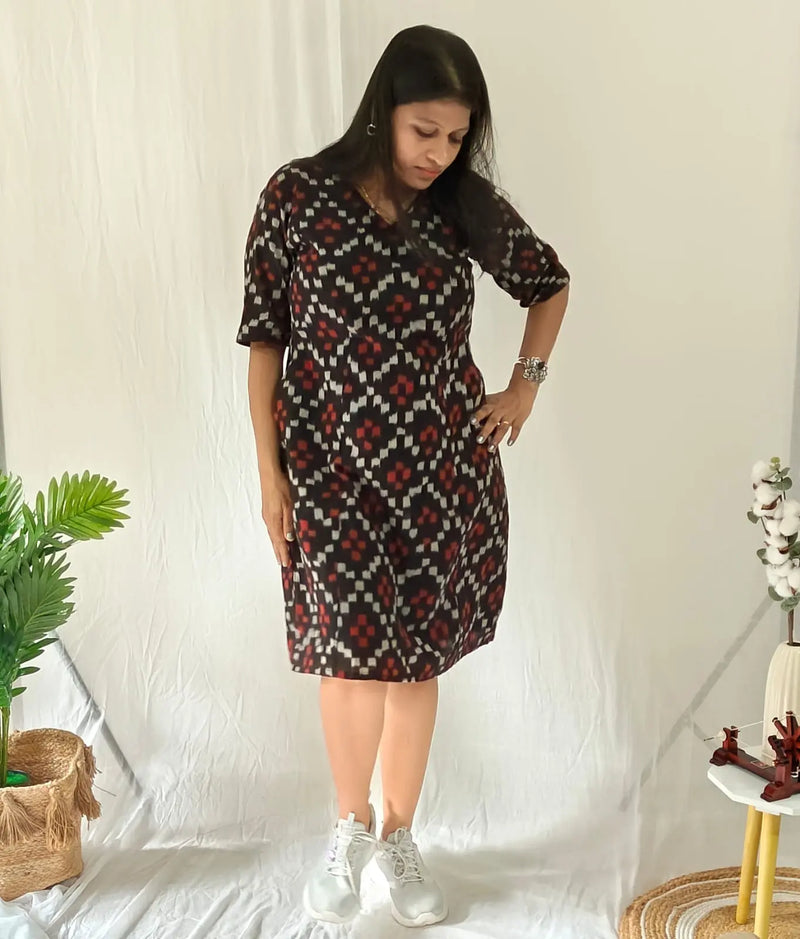
What Is Ikkat Weaving? The Tie-Dye-Before-Weave Process Explained
If you've ever noticed the soft, slightly blurred edges on an Ikkat pattern and wondered how that effect is achieved, the answer is: it happens before the fabric is even woven.
The Basic Process
Ikkat is a resist-dyeing technique applied to the yarn itself, not the finished cloth. Bundles of yarn are tied tightly at specific points with a resist material so that when the yarn is dyed, the tied sections stay uncoloured. The yarn is untied, retied in new sections, and dyed again — sometimes across several colours and multiple rounds — before it ever reaches the loom.

Why the Pattern Looks 'Blurred'
Because the pattern is set on the yarn before weaving, and because it's almost impossible to align every single thread with perfect precision during weaving, Ikkat patterns have that soft, slightly feathered edge. This isn't a flaw — it's the signature of the technique, and it's what separates genuine Ikkat from a printed imitation of the look.

Single Ikkat vs Double Ikkat
In single Ikkat, only the warp or only the weft yarn is resist-dyed before weaving. In double Ikkat, both warp and weft are separately dyed and then woven together so their patterns align to form the design — a far more time- and skill-intensive process.
Our Ikkat pieces, including the wrap dresses that combine Ikkat with Ajrakh block print, are part of the Rangrez Runway collection. Because the pattern comes from dyeing the yarn itself, no two lengths of Ikkat fabric turn out identical.

Where This Fits at Utakalp
Our Ikkat pieces are built around this same yarn-dyed foundation — pattern first, cloth second. The Tana Green Ikkat Dress is a good place to see the technique in a simple silhouette.

The Resha Double Ikat Shirt Dress shows the more complex double-Ikkat weave, where both warp and weft are resist-dyed and aligned by hand on the loom.